Signs
Signs of a buried line leak
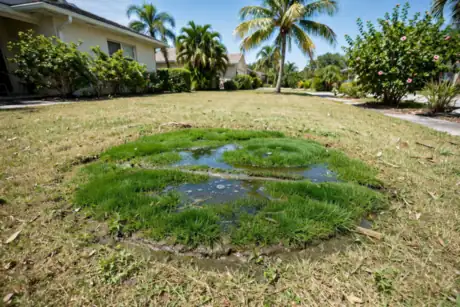
Start with your water meter. Turn off every tap and fixture in the house. If the meter still turns, water is leaving the system somewhere. In this city, that somewhere is most often a buried line. Other signs point the same way. One part of the yard stays soft, or greener than the rest, out of season. A section of driveway or pavers starts to settle. You hear running water at night, when the property is quiet. Or your bill rises, and indoor checks cannot explain it. A self check version of the meter test comes first for many owners. The water bill and meter testing guide gives you its steps. From there, the line is isolated and tested professionally.
Each sign means something slightly different. A soft patch means water is rising near the surface there. A greener strip means roots are drinking from a steady leak below. Settling pavers mean the sand beneath them is washing away. Running water heard at night means a pressurised line is open somewhere. And sometimes there is no surface sign at all. The sand drains the water down before it can pool. That is why the meter reading starts every visit. It speaks even when the yard stays silent.
The First Test
The meter test that splits buried from indoor
Before any listening starts, the loss has to be placed. It sits in one of three zones. Inside the building. Under the slab. Or on a buried line outside. The meter and shutoff test splits those zones apart. The specialist reads the meter, then closes the house shutoff valve. That valve stops every fixture inside the home. If the meter keeps moving with the house shut, the water is not leaving through the house. It is leaving between the meter and the building. On most properties, that stretch is buried.
The City of Pompano Beach gives owners the same test in simple form. Read the meter. Use no water for one hour. Read it again. A changed reading means water is leaving somewhere. The city also explains its own boundary. City crews locate only the lines the city owns, in the right of way or in easements. Lines on the property are located by private services, at the owner's cost. So the buried stretch is tested privately, section by section. The failing part is the one that keeps the meter moving.
The Method
How we locate an underground leak
The core method is outdoor acoustic correlation. Our technician places two sensors on the line, at fittings or access points. One sits on each side of the suspected section. Each sensor listens to the leak. Escaping water makes a sound as it leaves the pipe under pressure. The correlator compares the two signals. It times the gap between them. From that gap, it works out where the leak sits along the line. Soil, depth, and pipe material all change the sound. So the reading gets confirmed on the ground before anything is marked. The specialist listens again, right over the calculated point.
Tracing comes before listening. The expert maps the buried line's full path first, from the meter to the building entry. Sensors only work when they sit on the line itself. A sensor placed off the line hears the leak faintly, or not at all. The traced path also shows the line's material and depth along the run. Both change how fast the leak sound travels. The correlator uses those details in its maths. Then a ground microphone checks the answer at the surface. The specialist walks the line and listens at the calculated point. The sound should peak right there. If it does not, the test gets widened instead of marking. One limit stays honest. Correlation gives a position along the line, not the size of the break. How the meter behaves during isolation hints at the size instead.
First, though, the specialist isolates at the meter, shutting zones down one at a time and watching the meter at each step. This proves the loss sits on the buried section, not inside the building. Only the section that keeps the meter moving gets the correlation survey. That order matters in Florida sand. Digging on a guess tears up the yard for nothing. A confirmed point means one opening, in one place.
Local Ground Conditions
Sand, the water table, and why Pompano Beach yards mislead
Broward County ground is sand over a high water table. A buried leak drains downward and outward. So the wettest spot on the surface is often not the failure point. In the wet season, the water table can make low ground damp on its own. No leak needed. The technician reads the ground with that in mind. Surface damp is a clue, never the verdict. The verdict comes from the isolation numbers and the sound survey. The underground yard leaks guide covers yard behaviour in Florida sand in depth. That same ground runs under every city we serve, and the Broward County leak detection page sets out how the county-wide picture changes the test plan from city to city.
Escaping water also travels along the line itself. It follows the pipe bedding, the loose sand packed around the pipe. So it can surface several feet from the break, wherever the ground lets it rise. After heavy rain, the whole yard can feel soft for a day or two. That softness fades as the ground drains. Leak softness does not fade. It stays in one place, and the meter backs it up. That pairing, a fixed soft spot plus a moving meter, is what the specialist trusts.
The same sand and water table run under the neighbouring cities. The specialists we connect you with carry out underground leak detection in Fort Lauderdale along the canals, and underground leak detection in Deerfield Beach in the yards there, the same way: meter first, soft spot second.
Scope
Which lines are covered
The expert covers the service line from the meter toward the building. Yard supply runs are covered too, and so are buried branches that feed outdoor points. Sometimes the problem sits on the main line run itself. That run gets its own test: water line leak detection isolates it section by section, meter to building. A warm floor or another indoor sign can point under the slab instead. That is slab leak detection. Buried branches also feed irrigation lines around the yard. If the wet patch follows one sprinkler zone, the sprinkler leak signs guide walks through the zone by zone check.
Many of these lines cross hard surfaces on their way in. They pass under driveways, pavers, and pool decks. A leak under a crossing still shows the same way. The meter moves, and the ground at the edge of the surface stays damp. The specialist traces and listens through soil and pavement alike. The marked point can sit under a crossing. Knowing that early shapes the repair talk, before any surface is lifted.
The Report
The report
Every detection ends the same way. You get the marked location and a written report. The report lists the line traced and the isolation readings. It also lists the correlated position and the confirmation result. That report is what a repair decision is built on. It also supports an insurance file. And it supports a City of Pompano Beach leak adjustment request. The water bill adjustment guide sets out how that request is made, step by step.
The report also records the depth of the line where it could be measured. It holds photos of the traced path and the marked point. So the person who opens the ground works from evidence, not memory. One opening, at one marked point, is the usual outcome. If the readings had stayed unclear, the report would say that too. The technician does not mark a point the evidence cannot defend.
Irrigation lines: a separate underground system
One buried network on a Pompano Beach lot is not the water supply. The irrigation system is its own grid of lines, valves and zones, fed through its own shutoff, and it loses water in ways that imitate a supply line break: a strip of yard that never dries, a meter that moves while a zone runs, a bill that climbs through the wet season. Treating the two systems as one is how yards get dug in the wrong place.
So the isolation step on an underground visit separates them first. The irrigation feed is shut and the meter is watched. If the loss stops, the failure is in the irrigation grid, zone by zone from there. If it continues, the loss is in the potable line, and the acoustic survey follows that line only. This page owns the buried supply lines; irrigation is proven or excluded here, on the same visit, before any marking happens.
Same Day Priority for Active Leaks
Call for underground leak detection in Pompano Beach
Active buried leaks get same day priority. Call (754) 346-1772 and tell us what you have seen. We plan the isolation and the survey around your property.
The listening side of this work has its own guide: acoustic leak detection vs jackhammering explains why finding a leak by sound protects the floor and the yard.
Clear Answers
Frequently asked questions
Does the whole yard need to be dug up to find the leak?
No. The specialist traces the line and confirms the leak from the surface first. The sound survey marks one point. That marked point is the only place an opening needs to be discussed.
The meter moves but the yard looks dry. Can a buried line still be leaking?
Yes. In sand, lost water sinks and spreads. It does not pool on top. So a dry yard does not clear a buried line. Isolation testing settles the question.
How is an underground leak different from a water line leak?
The two settings overlap. Underground detection covers buried supply and yard lines in open ground. Water line detection covers the main line, from the meter to the building.
What happens after the leak is pinpointed?
You get the marked location and the written report. With that proof in hand, you decide the repair route. Detection ends at the confirmed location and the report.
How does the correlator turn sound into a location?
Each sensor hears the same leak sound at a different moment. The leak sits closer to the sensor that hears it first. The correlator times that gap. With the pipe material and the distance between the sensors, it works out the position. The expert then checks that position with a ground microphone before marking it.